 KnightBike Hub
KnightBike Hub
KnightBike Hub
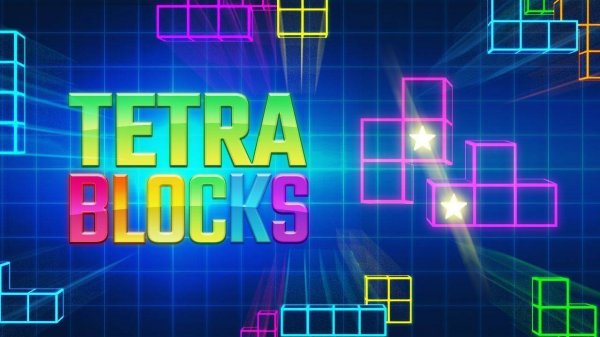
Shape Stack Challenge strips away unnecessary elements to deliver a pure logic puzzle experience. The increasing speed keeps the tension high without feeling unfair, and the minimal visuals let you focus entirely on the shapes. It is an excellent choice for players who enjoy testing their spatial reasoning and reaction time in a clean, family-friendly environment.
Shape Stack Challenge revolves around a simple yet deep mechanic: guide each falling piece into position so that it fills gaps in the rows below. When a row is completely filled with no empty spaces, it disappears, and the remaining blocks settle. This cycle of placement, completion, and collapse forms the heart of the experience. The challenge lies in anticipating how each new shape will fit with the existing layout, especially as the game speed increases over time.
Players encounter a range of geometric forms, each with a unique arrangement of squares. The ability to rotate these pieces before they land is essential for fitting them into tight spots. Mastering the rotation controls allows for more efficient placement, reducing the buildup of incomplete rows. The game does not introduce power-ups or special blocks, keeping the focus squarely on spatial reasoning and timing.
Points are awarded each time a row is cleared. Clearing multiple rows in a single move yields higher scores, rewarding strategic stacking that leaves narrow gaps. As the score climbs, the descent speed of new pieces increases, requiring faster decision-making. There is no level cap or story progression; the goal is simply to achieve the highest possible score before the stack reaches the top of the playing field.
The interface is deliberately minimal, with clear outlines for each shape and a neutral background that reduces visual clutter. Sound effects provide gentle feedback for rotations, placements, and row completions without being intrusive. This design philosophy ensures that players can focus entirely on the puzzle mechanics without unnecessary distractions, making it suitable for short play sessions or extended practice.
Controls are straightforward: arrow keys or on-screen buttons handle left and right movement, rotation, and a fast-drop option. The layout is consistent across devices, and the game does not require reading or language skills, making it accessible to a wide audience. The absence of timers or penalties for slow play means newcomers can learn at their own pace, while the increasing speed provides a natural difficulty curve for experienced players.
Player Comments
Sign in to comment
You must be logged in before posting a review or rating.
No account? Create one
No comments yet. Be the first to comment!