 KnightBike Hub
KnightBike Hub
KnightBike Hub
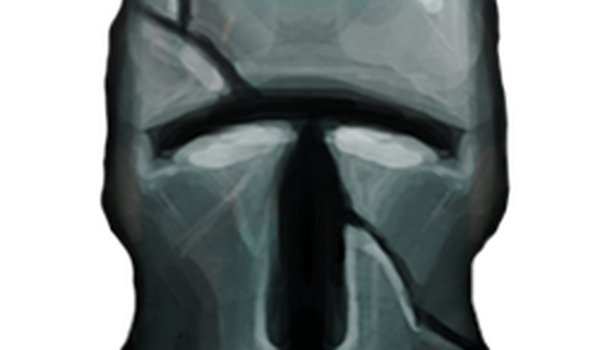
Hex Legion: Tactical Command succeeds by keeping its core loop simple while offering layers of strategic choice. The ability to merge and split legions of different troop types is a standout feature, allowing for creative army compositions. Map customization, from terrain removal to water coverage, ensures high replayability. The alliance system adds a social dimension that can turn the tide of battle. Controls are intuitive, and matches move at a satisfying pace. This is a solid choice for fans of turn-based tactics who appreciate player-driven variety.
Hex Legion: Tactical Command revolves around a simple yet deep cycle of movement, capture, and reinforcement. Each turn, players direct their units across a hex grid to seize towns. Captured towns automatically generate new troops, steadily increasing your army's size. The primary goal is to eliminate all enemy units and claim their settlements. This loop encourages careful planning and adaptation, as every decision influences the flow of battle.
Three troop types form the backbone of your forces: infantry, archers, and cavalry. A straightforward rock-paper-scissors dynamic governs combat, with archers beating infantry, cavalry beating archers, and infantry holding an advantage against cavalry. What sets this game apart is the ability to combine different troop types into a single legion. You can split these merged groups or merge them further, allowing for customized army compositions that respond to evolving battlefield conditions.
The map generation system offers extensive control over the playing field. Players can remove mountains to speed up movement, adjust water coverage from zero to sixty percent, and choose from three distinct map sizes. This flexibility ensures that no two matches feel identical. Smaller maps lead to quick, intense skirmishes, while larger maps encourage longer campaigns with more strategic maneuvering. Terrain placement becomes a critical factor in planning routes and defensive positions.
Matches support up to four participants, with the option to form temporary alliances. These partnerships enable coordinated strategies, such as dividing enemy forces or sharing captured territory. Alliances add a social layer to the tactical gameplay, requiring communication and trust. However, alliances are not permanent, and shifting loyalties can create dramatic turning points. The alliance menu allows players to manage these relationships easily during a match.
The interface is designed for efficiency. Left-click selects units or towns, and hovering over tiles reveals movement or attack options. Right-click deselects, and right-click dragging scrolls the map. The mouse wheel controls zoom. Keyboard shortcuts streamline actions: N cycles through units, S splits a legion, Q performs a quick split, T toggles movement status, E ends the turn, A opens the alliance menu, and M returns to the main menu. These controls reduce clutter and keep focus on strategy.
Each match presents new tactical puzzles due to randomized maps and variable opponent strategies. The simple rules make it easy to start playing, but mastering unit composition, map control, and alliance management takes practice. The combination of customizable terrain and flexible army building ensures that players can experiment with different approaches. Over time, players develop a deeper understanding of positioning and resource allocation, making each victory feel earned.


Player Comments
Sign in to comment
You must be logged in before posting a review or rating.
No account? Create one
No comments yet. Be the first to comment!